Start with what your current identity makes difficult. If your logo is usable but every quote, site board and social post looks different, you may need better artwork and clearer rules. If the identity still suits the business but struggles in the places you now use it, a focused refresh may be enough. A wider rebrand deserves consideration when the way you present the business no longer fits its direction or the clients you want to reach.
Those are starting points for a review. Before commissioning a new logo, look at the material your customers actually see and agree what needs to improve.
01
Name the problem before choosing the size of the job
“We look dated” is a useful opening observation, but it leaves a designer with a lot to interpret. Be specific about what prompted it. Perhaps the website describes services you have moved away from, the lettering disappears on workwear, or different people keep using different versions of the logo.
Write a sentence that describes the problem and where it appears. For example: “Our proposals need to introduce our commercial maintenance work clearly, but they still look and read like leaflets for domestic repairs.”
That sentence gives you something to assess. The problem might sit in the wording, the document layout, the identity or a combination of them. Agreeing that distinction helps define the work to commission.
02
Put the current material side by side
Collect a small set of real examples: your website on a phone, a recent quotation, a vehicle photograph, workwear, a site board and a social profile. Use the versions the team is working with today, including anything that feels awkward or inconsistent.
For each item, note:
- What the reader should understand or do.
- Whether the business name and relevant information are easy to read.
- Which logo, colours and typefaces have been used.
- Whether the wording still describes the work you want to attract.
- Who holds the current artwork and who orders or updates the item.
Separate a design problem from a damaged or unsuitable file. A screenshot of a logo used in a large print layout may need replacing with the proper artwork. That observation alone does not tell you whether the identity needs redesigning.
Keep examples of what works too. Record any verified customer feedback about the identity, alongside the practical reasons your team wants to retain a particular element. Familiarity within the office is a different kind of evidence from what customers recognise.
03
Choose between three practical scopes
The words refresh and rebrand can cover different amounts of work. Ask a designer to describe the proposed changes and deliverables, even when you agree on the label.
Make the existing identity easier to use
This is worth exploring when the identity fits the business and the main problems are inconsistent applications or missing usable files.
The work might include organising approved logo versions, agreeing colour and type specifications, and preparing a quotation template or site-board layout. You could retain the central identity while giving staff and suppliers better material to work from.
Our graphic design service covers documents, signage artwork and digital materials. The brief should identify which applications need attention and what the existing identity allows.
Refresh selected parts of the identity
A refresh may suit a business that wants to keep recognisable elements while resolving particular weaknesses. You might need a clearer arrangement of the name, simpler supporting graphics or a more consistent approach to typography and layouts.
Set out what should remain recognisable and what can change. Then check the proposed work in the places that exposed the original problem. A change that looks attractive on a presentation slide still needs to work on your quotation, website and agreed physical materials.
Avoid assuming that a refresh is always a small job. The amount of artwork and replacement material required depends on where the changes will be used.
Review the wider brand direction
A broader review may be appropriate when the business is making a substantial change in the services it offers, the people who appoint it or how it needs to present its work. Start with that business direction before developing the visual identity.
Describe your current and intended customers, the services you can substantiate and the reputation you want the work to support. Decide which existing elements still help and which create confusion. The agreed scope may include positioning, visual identity, messaging and applications, but each part should be explicit in the proposal.
A new appearance cannot supply missing project evidence or make an unclear service offer precise on its own. Those parts of the brief need attention as well.
04
Test the direction on the material you use
Ask to review representative applications before approving the identity for a wider rollout. Choose the items that matter to your business: perhaps a phone-sized website header, a quotation cover and a supplier's site-board layout.
Check whether the business name, service information and next step remain clear. Look at the proposed colours against both light and dark backgrounds where those uses are required. Review small text at its intended reading size rather than judging everything from a large mock-up.
For vehicle graphics, workwear or signs, agree who obtains the supplier's artwork requirements and checks the production proof. Include any sample or proof costs in the discussion. Design approval and approval to order physical materials should be clear separate decisions.
If the website itself needs different pages or better project content, define that work separately. Our construction website planning guide helps you identify what visitors need to find and understand.
05
An example: a roofing firm moving into more maintenance work
This is a hypothetical planning example, not a Crafters client result.
A roofing firm wants more planned commercial maintenance work. Its name and logo still describe the business accurately, but the website opens with emergency domestic repairs, the quotation cover lists old services and the team has several versions of its logo file.
The review identifies three immediate tasks: clarify the service information, prepare a suitable quotation layout and organise the approved brand files. The firm can assess those changes before deciding whether the logo itself needs redesigning. A relevant project story may also help explain its maintenance experience, provided the facts and permissions are available.
If the review instead found that the current identity consistently gave the intended audience the wrong impression of the business, a wider identity brief could be justified. That decision would need evidence from the review, rather than an assumption that moving into commercial work requires a new logo.
06
Plan the rollout and handover before approving the scope
List where the approved identity needs to appear, who will make each change and when it is needed. A digital update, a new batch of workwear and replacement vehicle graphics may have different production arrangements. Decide the sequence around the business's needs and any deadlines you have already committed to.
Ask for the design fee and any printing, fabrication, installation, photography or licensing costs to be identified clearly. Confirm what your team can edit, which files suppliers will receive and how further applications will be commissioned. A logo file does not define all of that work.
The UK government's business branding guidance recommends including guidelines when commissioning a designer. These can explain logo use, colours, applications and the way the business communicates. For your team, the useful test is whether someone can use the supplied files and guidance to prepare the next agreed item consistently.
Keep one clearly labelled location for current files and identify superseded versions so they are not accidentally reused. Name the person who will answer supplier questions and approve future artwork.
07
Give the designer a decision they can work with
Bring the material from your review to the first conversation. Explain what prompted the work, what should remain, where the identity causes problems and which applications need to be ready first. Include the person who can approve the direction and any production dates that affect the sequence.
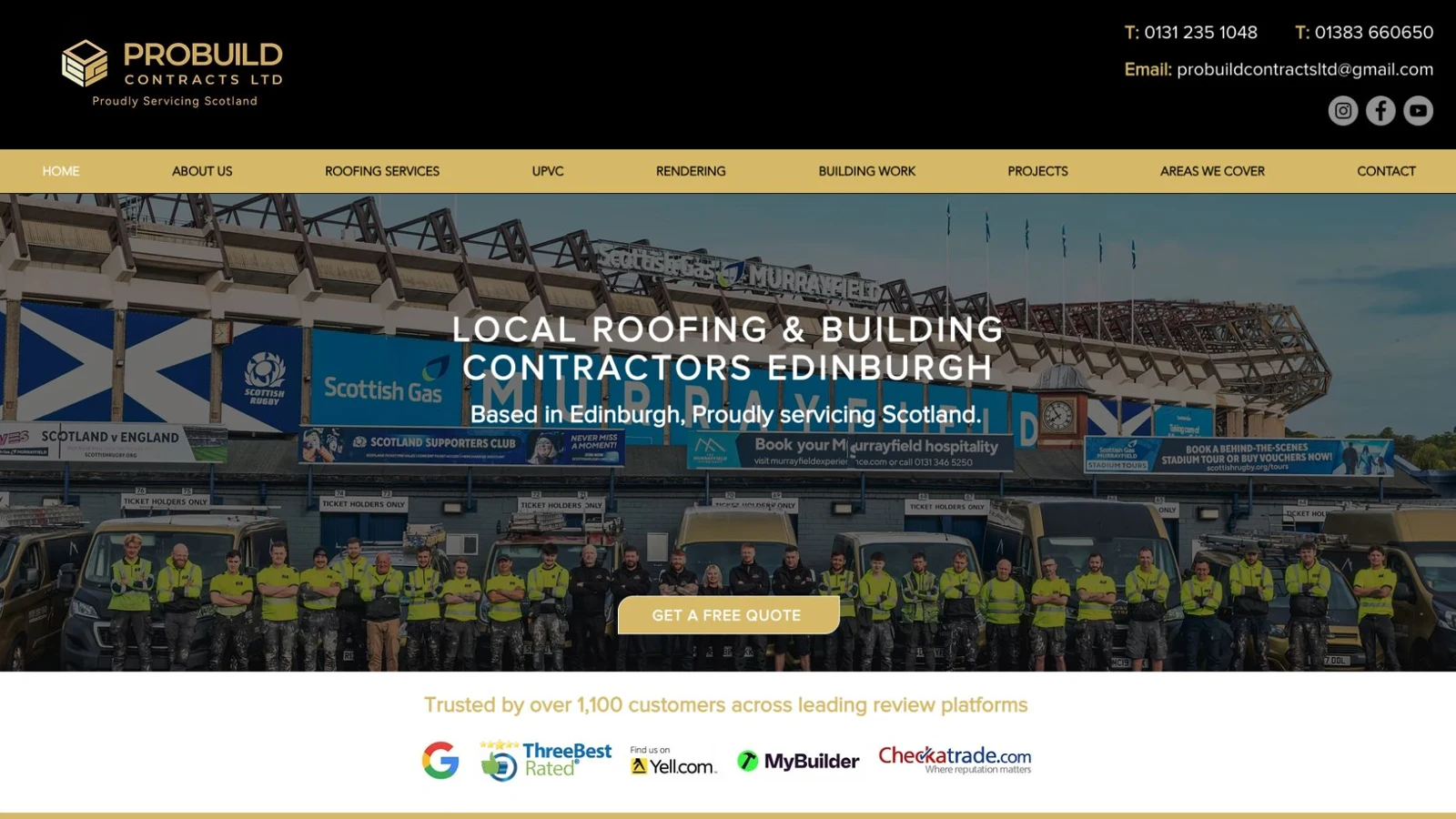
Our ProBuild Contracts case study shows a commissioned identity alongside a website designed and built by Crafters. It is a useful example of seeing the brand in use across service information and enquiry routes. It does not establish what a refresh would achieve for another business.
At Crafters, our branding work for construction businesses starts with your customers, what already works and where the identity needs to appear. Tell us what you want to improve, and share examples of your current branding. We can discuss the scope those examples justify, from practical applications to a wider identity project.