
01
Give each page a job
Your homepage introduces the business and helps readers find the right service. Service pages explain what you can do for them; project pages show relevant experience. Contact information tells them how to begin. Avoid repeating the full company introduction on every page. Write the information a visitor needs at that point in their decision.
02
Explain a service before listing its benefits
Name the work, who typically needs it and what is included or agreed separately. Where scope depends on a site assessment, design or specification, say so. A visitor should be able to distinguish a complete installation from a supply-only offer, or a design service from construction, without having to guess. Use the terms your customers recognise and explain specialist language when needed.
03
Use technical claims carefully
Work from current specifications, approved documents and a conversation with the technical lead. Check the product, system, application and conditions behind any performance claim. Copywriting makes that information understandable; it does not certify compliance or replace professional assessment. Don’t carry an old accreditation, guarantee or product claim onto a new website without checking it.
04
Show how an enquiry becomes a project
Describe the steps you actually follow: an initial conversation, the information you need, any assessment and how you prepare a proposal. Identify who supplies drawings or specifications where relevant. Only state delivery times or prices when you can support them, and explain the conditions. Clear responsibilities help a prospective client prepare a useful enquiry.
05
Make your working area meaningful
Name the areas you genuinely serve and explain any difference between local domestic jobs and larger contracts. Use relevant project locations with permission. A list of towns is less useful than knowing whether you take on that type of work there. Avoid presenting a service area as a local office if you do not have one.
06
Put proof beside the service it supports
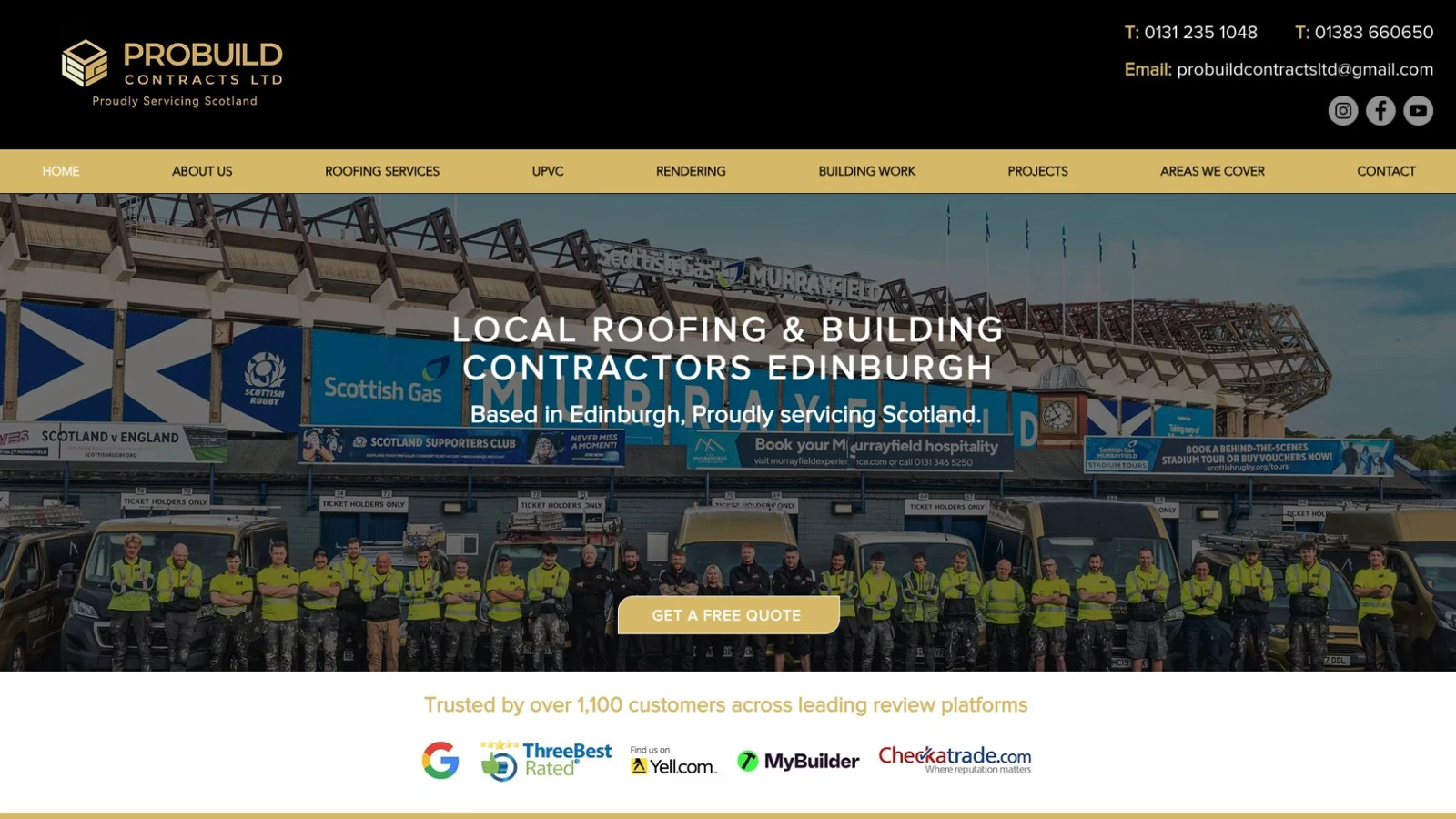
Choose projects that demonstrate the capability you are describing. Link to the full story, explain your contribution and retain image credits. ProBuild’s Crafters case study brings together the branding, website and Google Ads commission; it does not isolate a return from advertising. Keep the same distinction between what was delivered, client feedback and measured results in your own copy.
07
Brief your copywriter with source material
Share existing pages, priority services, your audience, genuine working areas, approved projects and the questions customers ask. Nominate someone to check technical facts and someone to approve the finished wording. Agree the pages, interviews, review rounds and any migration work before drafting. You can begin with notes and a conversation; you do not need to write the finished copy first.
08
Review the page as a customer would
Read it on a phone and ask someone outside the business to find a service, assess a relevant project and locate the contact details. Note unexplained terms or missing information. After publication, use available search and enquiry feedback to decide what needs updating. Search visibility is one measure; the suitability of the resulting enquiries matters too.
A SERVICE-PAGE WRITING BRIEF
Bring these details to the first conversation.
- The service and type of customer this page is for.
- What is included, what is separate and what depends on assessment.
- Your actual working area and any project-size constraints.
- The steps from first enquiry to an agreed proposal.
- Relevant projects, current credentials and approved technical sources.
- The person who checks the facts and signs off the copy.
A useful brief can be a set of notes. The writing work turns those notes into a page with a clear purpose, links to relevant evidence and an appropriate enquiry route.
Prepare a project story to support the serviceSEE THE WORK
See the ProBuild brand and website commission